

How to choose skis, boots and snowboards for the way you actually ski or ride: what to look for at each stage, the rules of thumb fitters start from, and where the wall in Lincoln and Scarborough fits in.
Boots first, at every level
Find the description that sounds like you. Each one says what to look for in a ski, a boot and, where it applies, a snowboard, the mistakes we see most, and the products on our wall that fit.
The charts below narrow the field. Sizes, this season’s stock and the final call happen in the store with a fitter.
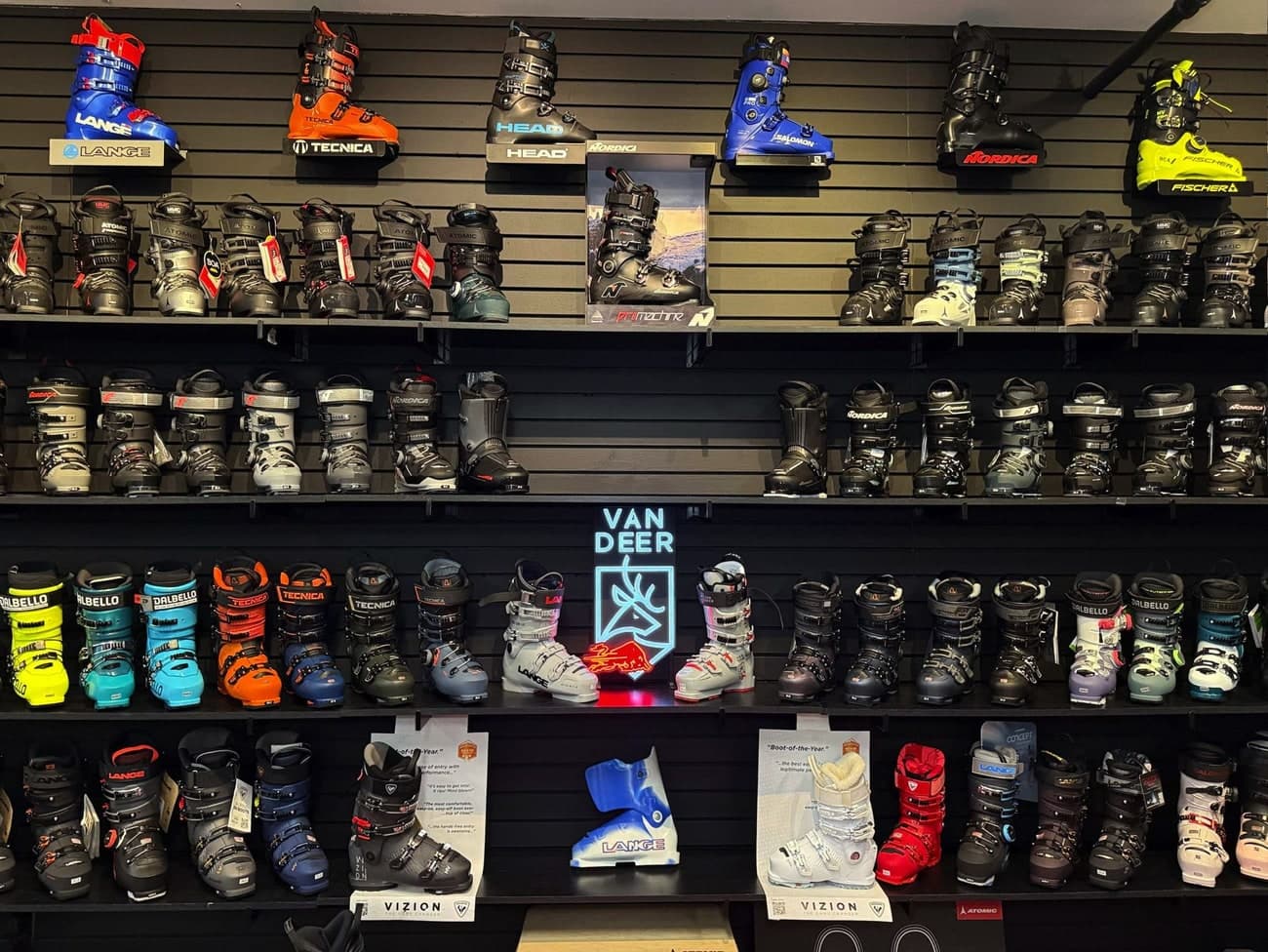 Lincoln boot wall
Find your type
The kinds of skier we fit every week. Pick the one closest to you.
 First-time adult
 Leisurely adult on greens and easy blues
 Older adult
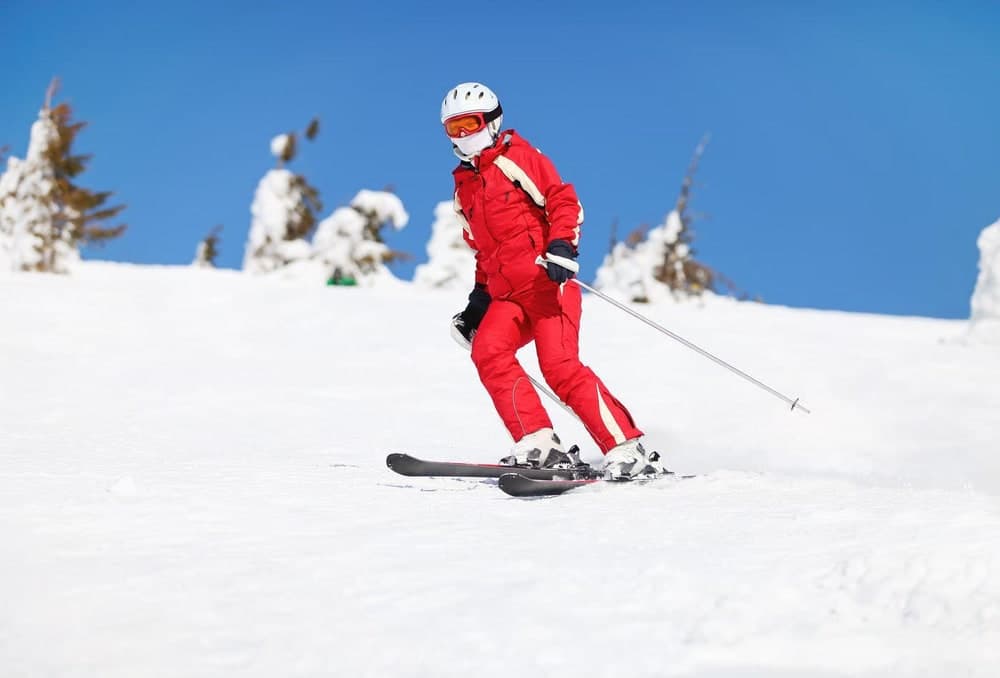 Progressing intermediate
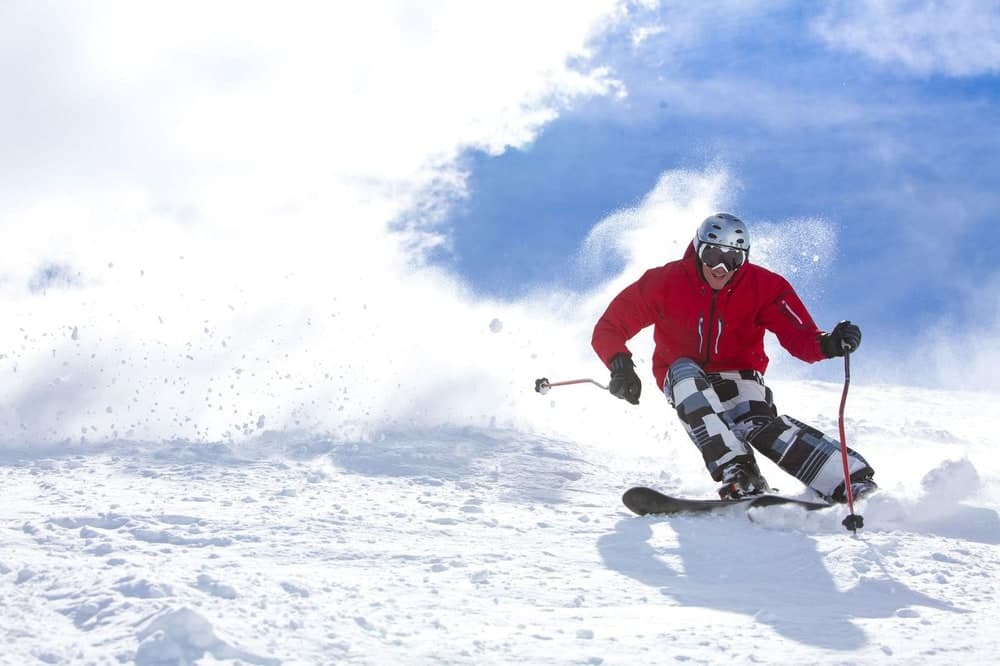 Advanced all-mountain
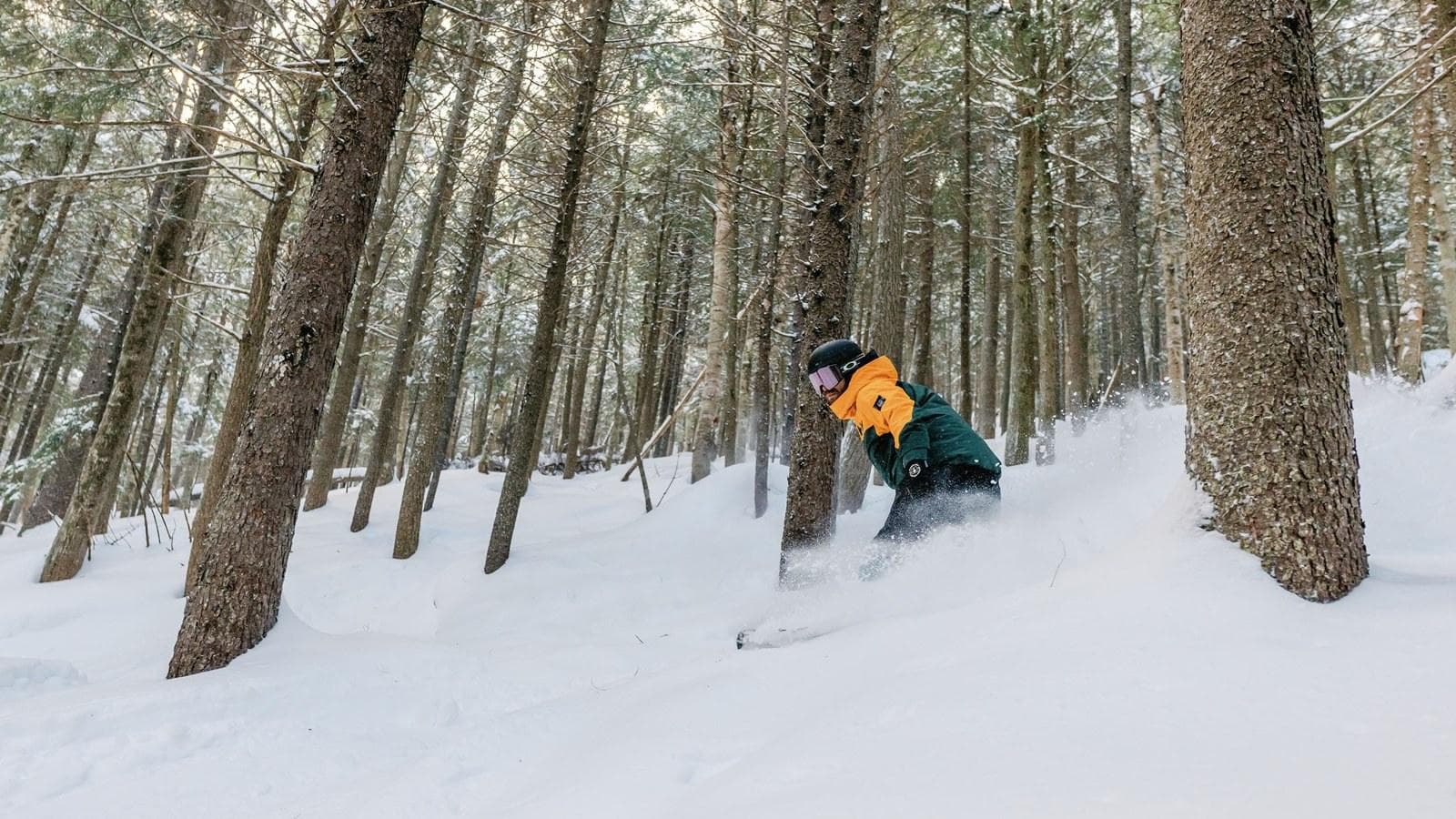 Powder, freeride and sidecountry
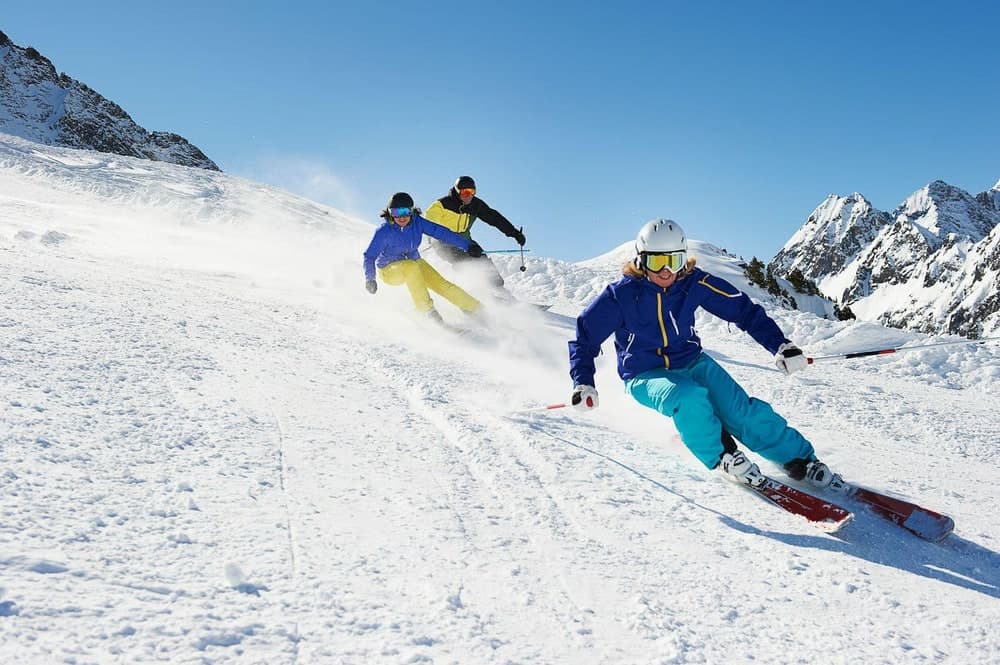 Groomer carver
 Kids: first lessons
 Kids on a ski team
 Women-specific fit
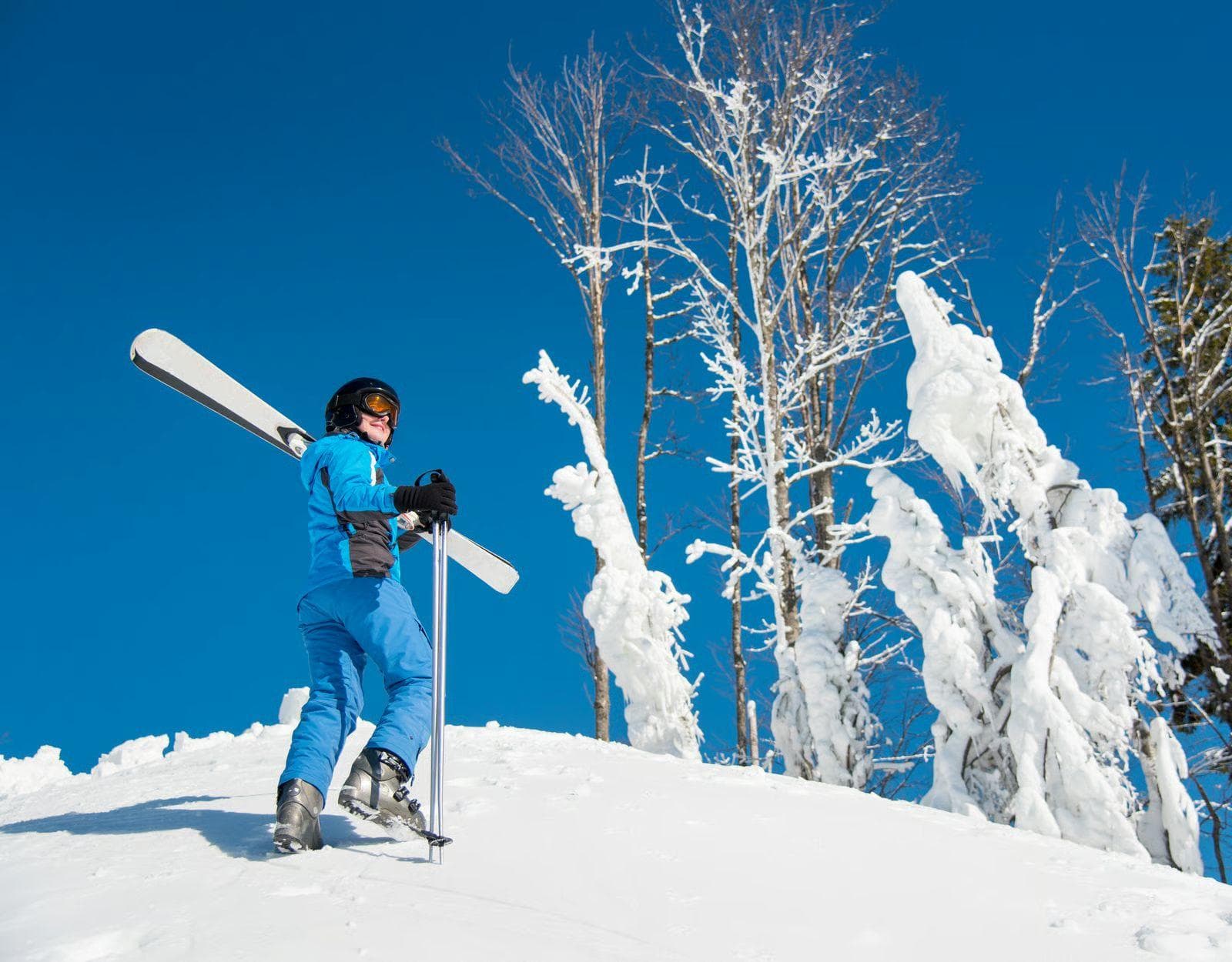
First-time adult
New to the sport or back after a long gap.
Length at the chin, or about 10 to 15 cm below your height. A carving or frontside width of 78 to 88 mm, which is where most rental skis sit, with a short 13 to 14 m radius, a little tip and tail rocker over traditional camber, and a soft flex. Wood cores give more life than foam; either is fine for a first ski.
Flex in the 60 to 80 range for men and 50 to 60 for women, at your measured Mondopoint or slightly longer. Do not buy the roomiest boot in the store because it feels best in the shop; liners pack out and every boot gets looser. Boots come before skis.
See the snowboard section: soft flex, rocker or flat profile, a true twin.
Buying skis first and boots last. Sizing boots for shop comfort. Choosing a stiff expert ski because it was on sale.
Rossignol Experience 78 and 82 Ti, Elan Wingman 78 C. Rossignol Evo 70 boot (104 mm last, 70 flex). Or rent for a season at the Lincoln counter and buy boots first.
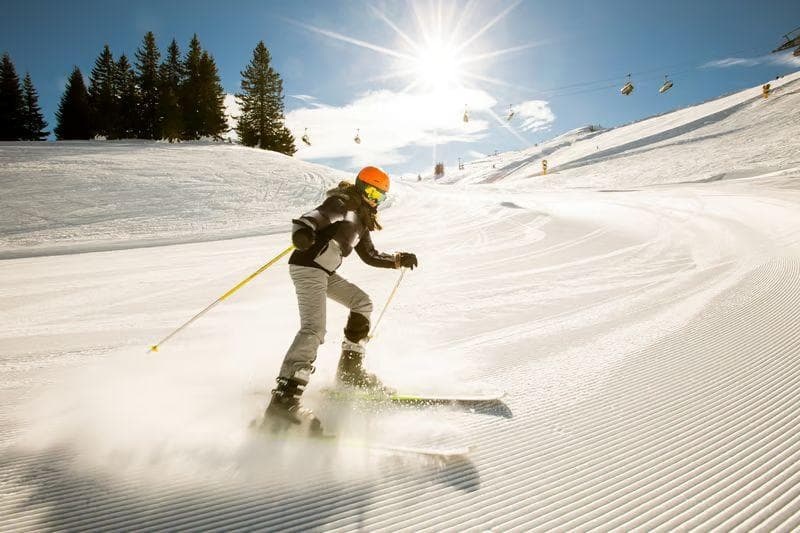
Leisurely adult on greens and easy blues
Happy to be on the mountain, in no hurry to ski faster or steeper.
The same chin-to-nose length and frontside width as a first-timer, with a short radius so the ski turns on its own. Lighter, no-metal constructions suit cruisers who never push into refrozen chop; the trade is less grip when the groomers turn to ice, which is worth a conversation on the floor before buying.
A beginner-to-intermediate flex and a fit chosen for warmth and ease of entry. Softer boots forgive imperfect technique. If your feet run cold, ask about insulated liners and heated socks before sizing up.
Being talked into a two-sheet-metal ski meant for speed. Choosing a 130 flex boot for status.
Rossignol Experience 82 Ti, Elan Ripstick 88, Nordica Unleashed 90; Kästle’s lighter TX line for the weight-conscious. Boots: Atomic Hawx Prime 90 or 100, Nordica Sportmachine, Tecnica Mach1 110.
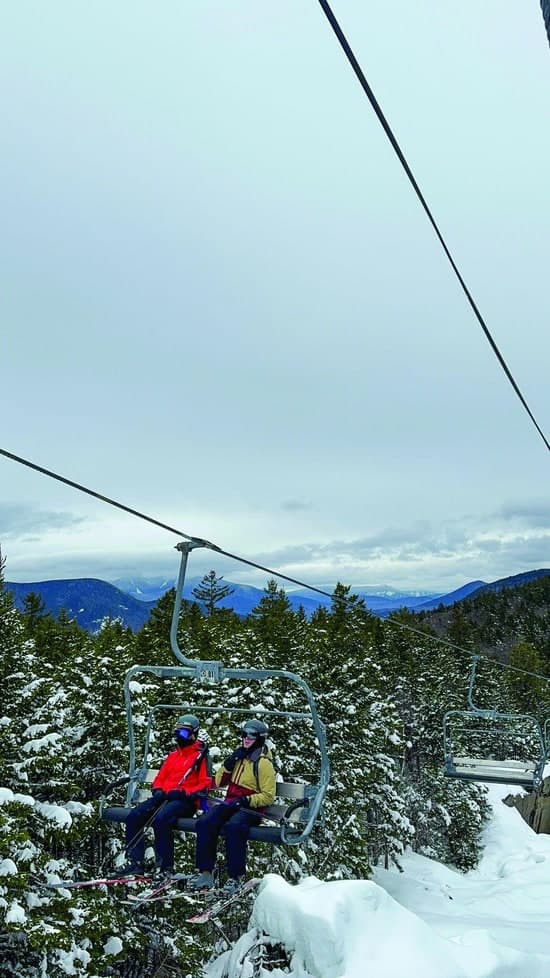
Older adult
Fifty-five and up, with warmth, easy entry and low effort at the top of the list.
A relatively soft flex so the sidecut engages with little effort, in a frontside width, sized chin to nose. Lighter skis reward the athletic skier who now prefers to take it easier; demo before buying.
Look at ease of entry and exit first: rear-entry designs, wide-opening shells and walk modes make a difference on a cold morning. Padded, insulated liners and grippy walkable soles matter. Nordica’s HF rear-entry line (102 mm, flex 75 to 120) and Sportmachine (102 mm with a soft-flap entry) and Atomic’s Hawx Magna 100 (102 mm) are built for this. No maker publishes an age-specific flex; use the weight table and go softer.
Riders with joint concerns tend to do better on a softer, forgiving profile than on full camber.
Assuming the boot that was right at 40 is right at 65. Skipping the demo.
Nordica HF, Nordica Sportmachine, Atomic Hawx Magna, Tecnica Mach1 HV. Skis: Rossignol Experience 82 Ti, Elan Ripstick 88.
Progressing intermediate
Parallel turns on blues, starting to ski faster and in more places.
Chin-to-nose length, 80 to 95 mm for Eastern snow, a 16 to 20 m all-round radius, moderate stiffness for stability at speed, a stronger wood core and sidewall construction, and a hybrid rocker-camber profile. Metal is optional: it adds damping and edge hold on ice, not much weight, and some intermediates prefer it.
Flex 85 to 100 for men and 65 to 80 for women, and a closer fit than the first pair. This is the stage where a proper footbed pays for itself.
Staying on a chin-height beginner ski and a soft boot after the technique has moved on. Assuming metal is required.
Elan Ripstick 88, Nordica Unleashed 90, Salomon QST 94, Blizzard Black Pearl 88 (women), Völkl M7 Mantra for the stronger intermediate. Boots: Atomic Hawx Prime 100 and 120, Tecnica Mach1 110 and 120.
Advanced all-mountain
Skis the whole mountain in most conditions and wants one setup that does it all.
Nose-to-head length or longer, 88 to 102 mm, a full range of rocker profiles with rocker-camber-rocker the most common, and one or two sheets of Titanal at the top end for damping and grip.
Flex 110 to 120 for men and 85 to 100 for women, downsized in length and volume with a fitter. Stiffer is not better: a 2,510-skier poll found 39 percent in 130-plus boots and the editors questioned whether most need them.
Stiffer directional or directional-twin boards; see the snowboard section.
Chasing the 130 flex. Going wide for one powder day a year.
Elan Ripstick 96 Black Edition, Atomic Maverick 96 CTI, Head Kore 94 Ti, Völkl M7 Mantra, Nordica Unleashed 98, Rossignol Sender 104 Ti. Boots: Atomic Hawx Ultra 130 S, Salomon S/Pro Alpha 130, Nordica Promachine 3, Tecnica Mach1 130.
Powder, freeride and sidecountry
Chases soft snow, glades and off-piste terrain, sometimes with a skin track.
For an Eastern skier a 95 to 105 mm daily driver or a 105 to 110 mm powder-day ski; the broad sweet spot for dedicated powder skis is 105 to 120 mm. Tip and tail rocker for float and easy release, a radius over 22 m, and a longer length than the chart to offset the rocker.
A touring-capable boot with a walk mode and tech inserts if the skin track is part of the plan; the Atomic Hawx XTD, Salomon Shift Alpha and Nordica Unlimited all keep a 98 to 99 mm downhill fit.
Stiffer, longer, directional boards with setback stance float best.
Buying a 112 mm ski as the only ski in New Hampshire.
Salomon QST 100 and 106, Atomic Maverick 105 CTI, Atomic Bent 110, Nordica Unleashed 106. Boots: Atomic Hawx Ultra XTD 130 BOA, Salomon Shift Alpha BOA 130, Nordica Unlimited 130 DYN.
Groomer carver
Lives on corduroy and hardpack and wants grip, rebound and a race feel.
Under 80 to 82 mm, a radius under 16 m, sized shorter than an all-mountain ski, with camber underfoot and metal for edge hold when the groomers refreeze.
A performance fit on a narrow or medium last, downsized with the fitter, and a flex at the top of your band.
Full camber and a stiff boot are what hold an edge on hardpack.
Buying an all-mountain ski for a skier who never leaves the groomers.
Atomic Redster Q9 and Q9.8, Atomic Redster Q5 and Blizzard Thunderbird SP 7.2 for the newer carver, Rossignol Forza, Salomon Stance 80, Atomic X9S Retro Arc 735 RS. Boots: Atomic Redster TX 130, Nordica Promachine 3.
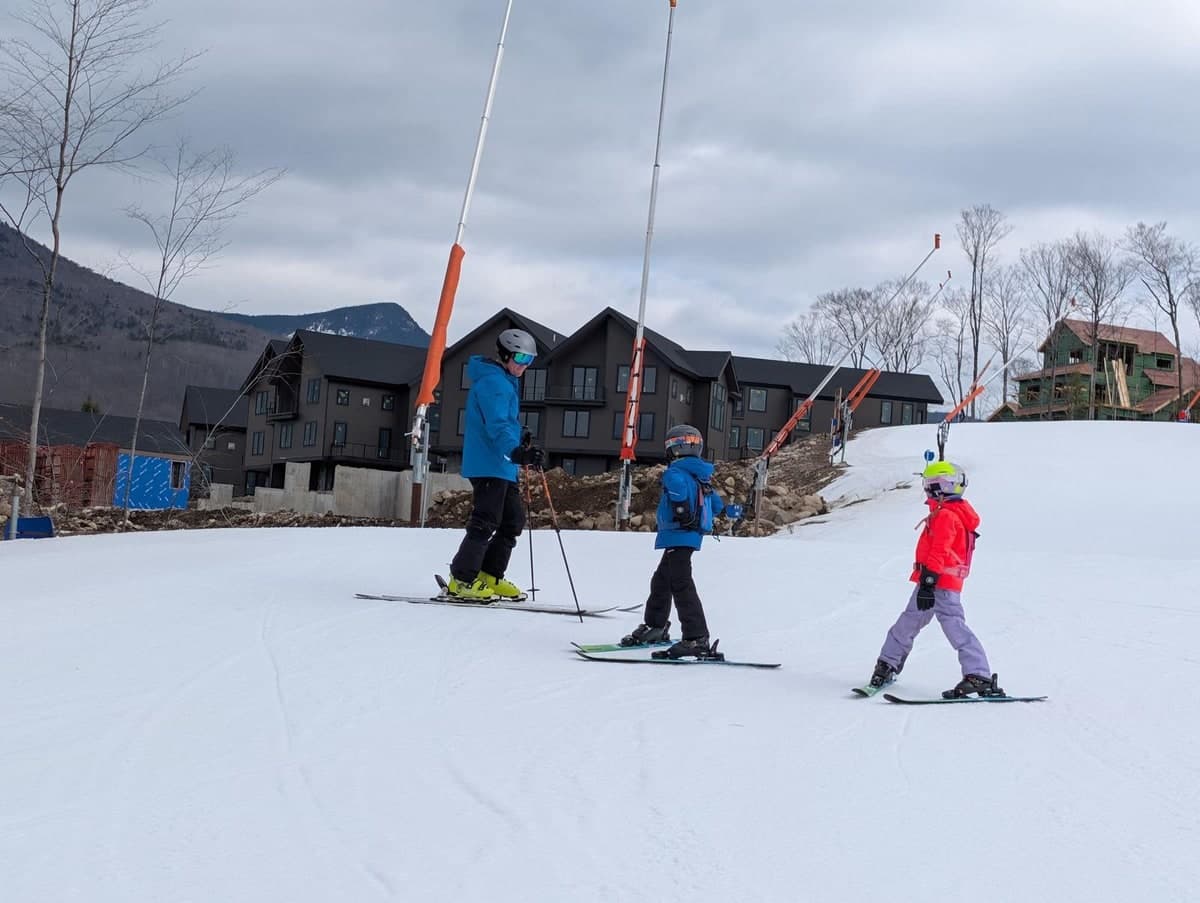
Kids: first lessons
From the first magic-carpet day to linking turns.
Length between the chest and the nose: chest for beginners, cautious or light kids, nose for confident ones. No more than about 10 cm over the suggested length for growth. If the child is at the top of a binding’s DIN range, the binding gets upgraded with the skis.
Fit for the current season. Oversized boots bought for growth are the most common reason a child cannot steer.
A short, soft, forgiving board; the Lincoln counter rents snowboard packages for kids.
Buying two sizes up. Hand-me-down boots with packed-out liners.
Junior rentals at the Lincoln counter from $20 a day; the Junior Seasonal Lease at the Scarborough store ($159 for skis, bindings and boots, ages 2 to 13, up to 130 lb, skis 70 to 150 cm).
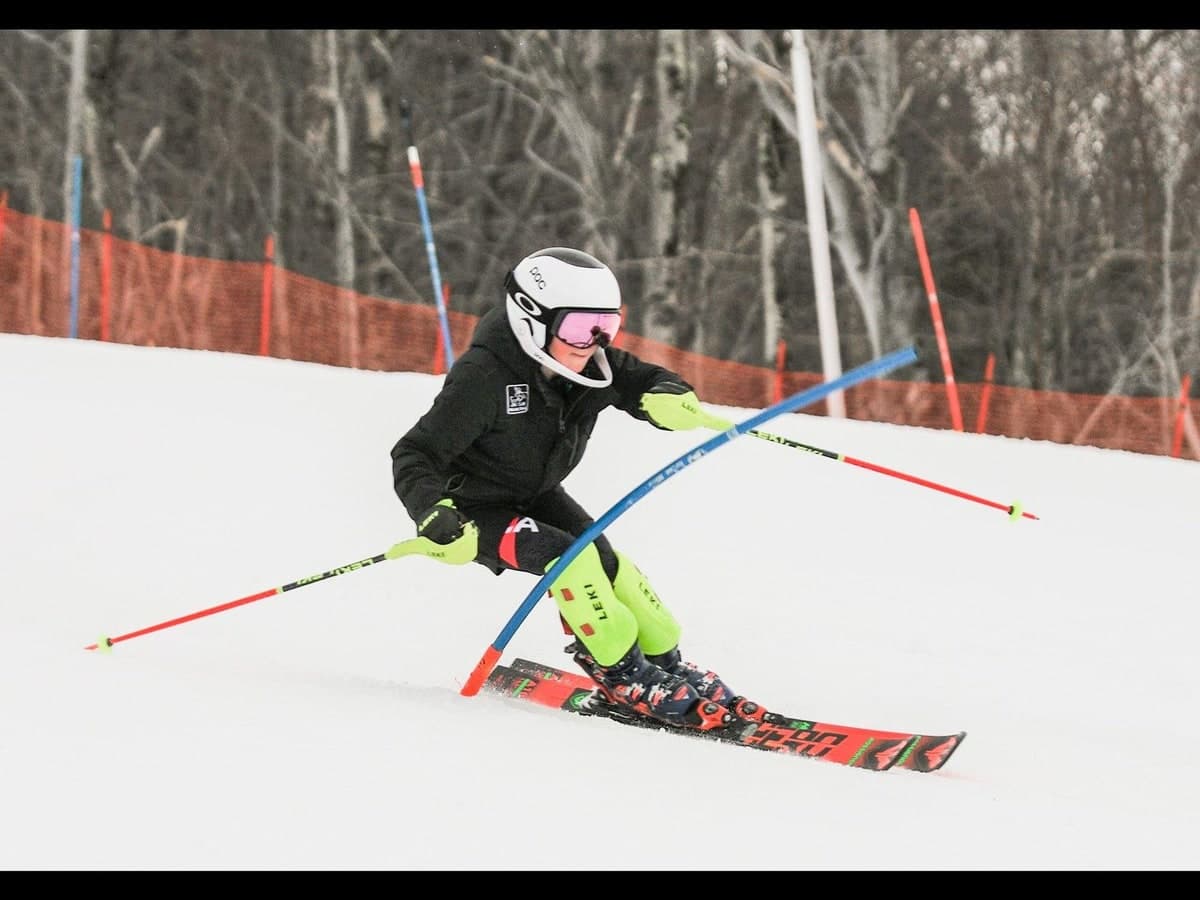
Kids on a ski team
Junior racers from U8 to U16, and the parents buying for them.
Discipline and age class set the ski. Rough lengths: U8 slalom 100 to 120 cm and GS 120 to 130; U10 SL 115 to 130 and GS 125 to 140; U12 SL 130 to 140 and GS 135 to 150; U14 SL 140 to 150 (130 minimum) and GS 150 to 170; U16 SL 150 to 165 and GS 170 to 183. US Ski & Snowboard sets a 130 cm slalom minimum and a 188 cm GS maximum with a 17 m minimum radius for U14 and U16, and a 50 mm stand-height limit. Bindings must match the plate. On used gear, check binding indemnification and boot-sole compatibility, because rule changes retire old equipment.
Junior race flex by age: U8 60 to 65, U10 65 to 70, U12 70 to 90, U14 90 to 110, U16 110 to 130, on a race last. Fit for this season, not next.
A full-height GS ski for a U10. A 130 flex boot on a 100 lb U14. Skipping the plate-to-binding check.
Van Deer GS-JR Pro, Atomic Redster junior race skis, Rossignol Hero and Head junior race. Boots: Lange RSJ 50 and 60, RS 70 SC, RS 110 SC. Race prep and plate mounting in the Lincoln Boot Lab; a waxed ski with a decent edge is race-ready at the younger ages, and a diamond stone on the side edges every outing or two keeps it that way.
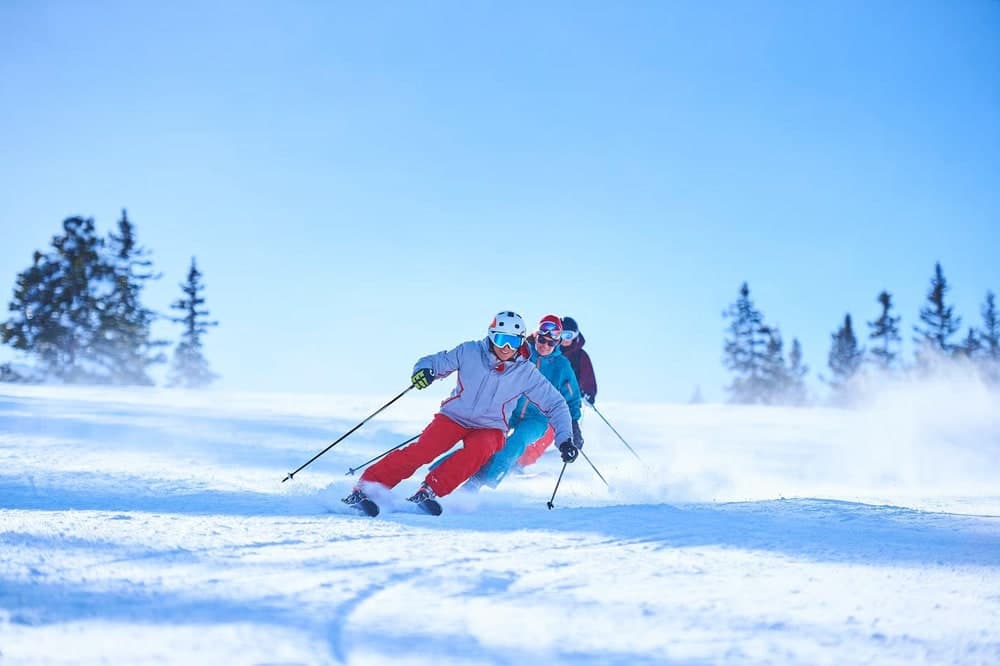
Women-specific fit
What actually changes in a women’s boot and ski, and when unisex is the better buy.
Women’s skis are usually lighter, softer and shorter, with the mount point a centimeter or so forward; lengths can run 20 cm shorter than a men’s chart. A strong female skier can ski a men’s ski without penalty.
The real differences are a shorter cuff that sits below the widest point of the calf, more cuff flare and a narrower heel pocket. Flex needs track weight and strength more than gender; a women’s advanced boot runs about 105 to 115 against a men’s 120 to 130. Warmer liners are mostly marketing. Above about a 27.5 Mondo, or for a stiffer flex, a unisex boot is often the better fit.
Assuming a women’s boot is just a softer men’s boot, or that every woman needs one.
Blizzard Black Pearl 88 (Avery’s staff pick). Boots: Tecnica Mach1 95 MV W, Nordica Sportmachine 3 95 W BOA for wider feet.
Rules of thumb
The charts every fitter starts from. They narrow the field; the bench decides.
| Ability | Length |
|---|---|
| First-timer / beginner | Tip at the chin |
| Intermediate | Between the chin and the nose |
| Advanced / expert | Top of the head or longer |
Go shorter if you are lighter, groomer-focused or carving; longer if heavier, faster, off-piste, or on a powder ski with a lot of rocker. Longer is not automatically more stable.
| Width | Use |
|---|---|
| Under 80 mm | Carving and firm snow |
| 80–89 mm | Frontside; the East Coast all-day width |
| 90–99 mm | All-mountain |
| 100–109 mm | All-mountain with a soft-snow lean |
| 110 mm and up | Powder |
Turn radius: under 16 m is a short, carving turn; 17 to 22 m is the all-mountain middle; over 22 m is a long, big-mountain turn.
| Ability | Men / Women |
|---|---|
| First-timer to beginner | 60–80 / 50–60 |
| Intermediate to advanced | 85–100 / 65–80 |
| Advanced to expert | 110–120 / 85–100 |
| Expert and race | 130 and up / 110 and up |
Weight moves the number: a lighter skier needs a softer boot to flex it, a heavier skier a stiffer one. When in doubt, go softer. Fit matters more than any flex number.
| Last | Foot |
|---|---|
| 97–98 mm | Narrow, low-volume |
| 100 mm | Average |
| 102–106 mm | Wide or high-volume |
Last numbers describe a neighborhood, not a guarantee. The shell fit on the bench decides.
| Rider weight | All-mountain / Freestyle |
|---|---|
| 80–120 lb | 140 / 135 cm |
| 110–140 lb | 147 / 142 cm |
| 125–155 lb | 150 / 145 cm |
| 145–170 lb | 156 / 151 cm |
| 160–190 lb | 160 / 155 cm |
| 175–205 lb | 163 / 158 cm |
| 185 lb and up | 165 / 160 cm |
Weight and boot size decide board size; the old nose-to-chin rule does not. Boot size 11 and up should look at a wide board.
Snowboards
The Mothership, inside the Lincoln store.
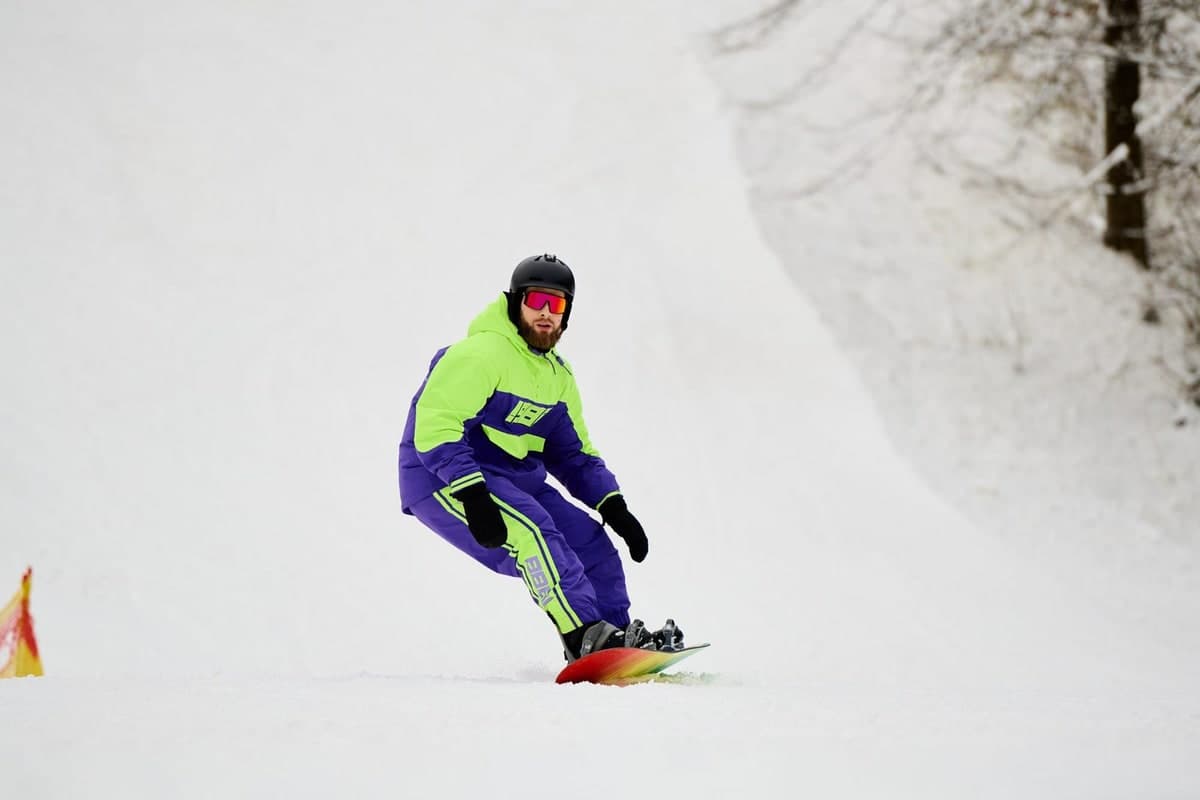
First-timer
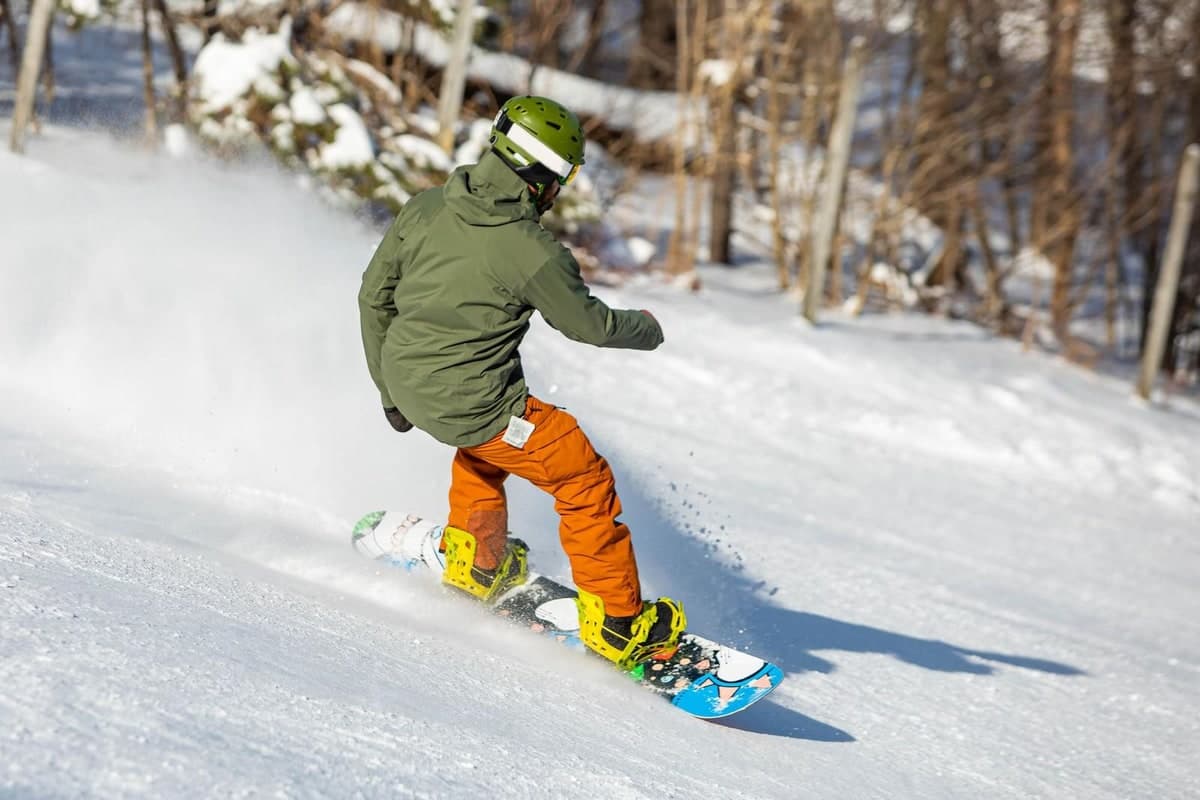
Soft flex (1 to 2 on most brand scales), a rocker, flat or hybrid profile that resists catching an edge, and a true twin so either foot can lead. Size from the weight table, then a few centimeters shorter.
Soft boots with a quick-pull or BOA closure; toes gently grazing the toecap, heel locked. Soft bindings to match.
Nidecker Play and Merc, Lib Tech Skate Banana. Boots: Salomon Faction BOA, Deeluxe ID.
Progressing rider
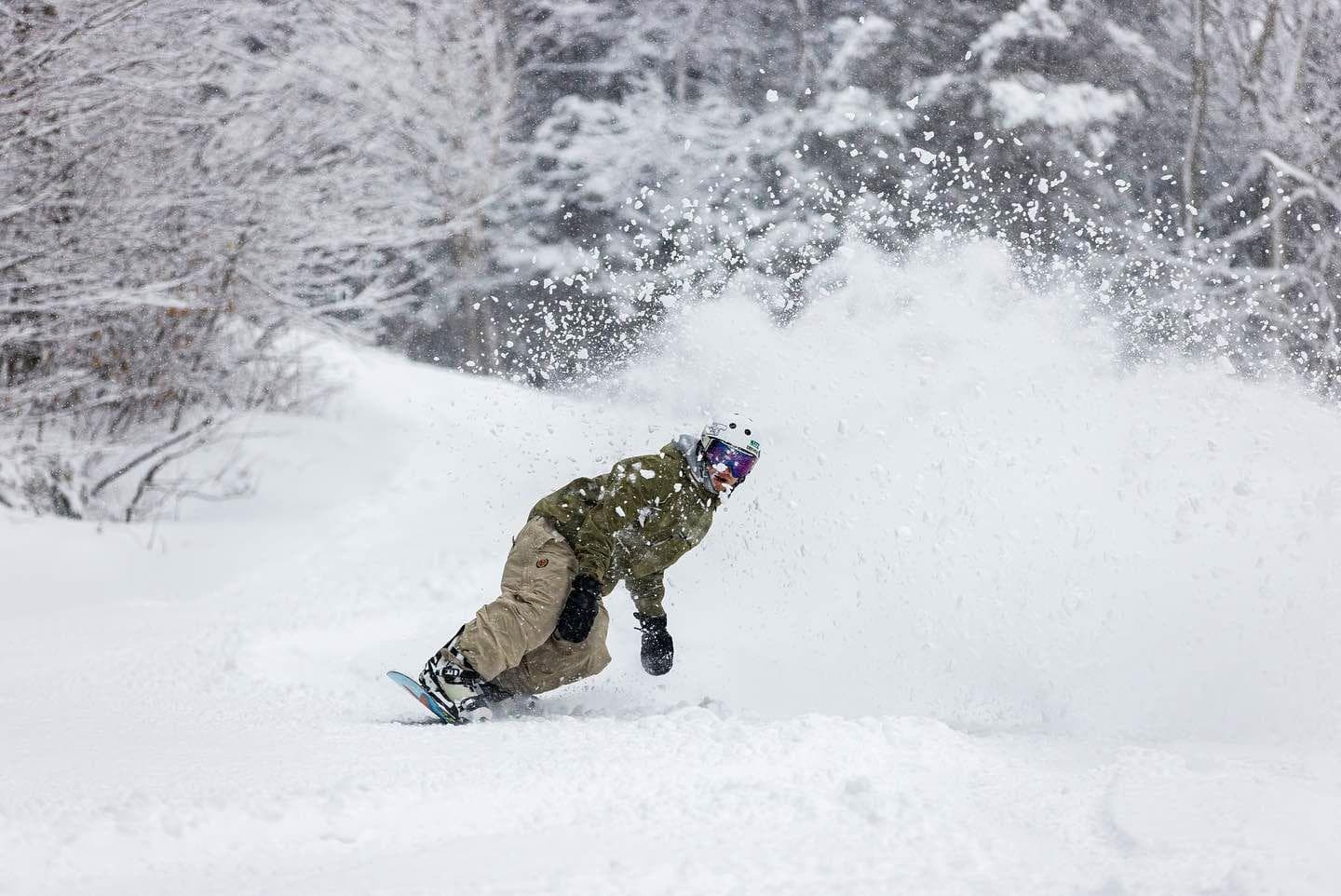
A hybrid camber such as Lib Tech C2 or Never Summer’s Rocker Camber that adds edge hold as speed goes up, medium flex, twin or directional twin.
Medium flex (3 to 5) boots and bindings that match each other; a soft boot in a stiff binding works against itself.
Lib Tech Skate Banana, Nidecker Merc, Never Summer Proto Type 3 for the stronger rider. Boots: Deeluxe ID, ThirtyTwo TM-2. Bindings: Rome Katana, Nidecker Supermatic OG.
All-mountain and freeride
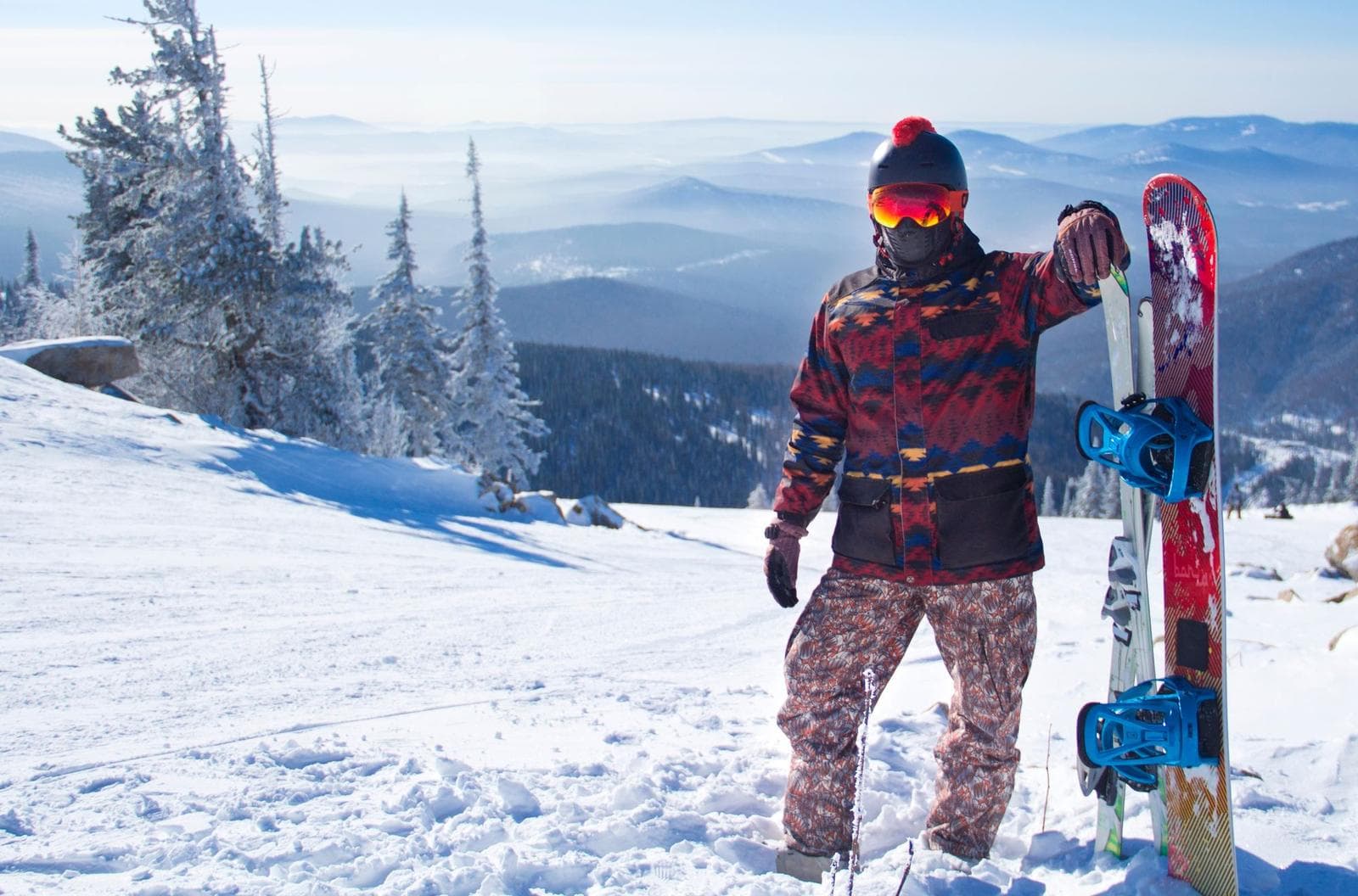
Stiffer (6 to 10), longer, directional or directional twin, with camber for grip and a setback stance for float.
Stiff (6 to 8) to very stiff (9 to 10) boots and responsive bindings.
Never Summer Proto Type 3, Nidecker Sensor Pro. Boots: ThirtyTwo TM-2, Deeluxe Deemon Pro. Bindings: Rome Katana, Nidecker Supermatic LT or Carbon.
Park
Jibbing: short, soft, flat or rocker, soft bindings. Jumps: camber, moderate to stiff, stiffer boots. Freestyle boards run 3 to 5 cm shorter than the all-mountain size.
Flex to match the job: soft for rails, stiffer for jumps. Check 2×4 and 4×4 hole patterns against the binding.
Ask the Mothership; the park wall changes every season.










The brands
Skis and ski boots on the walls in Lincoln and Scarborough.












Guidance paraphrased from evo, REI, Powder7, Switchback Travel, Tactics and The Ski Monster buying guides, brand fit pages, Bootfitters.com, Wayfinder, SkiTalk, US Ski & Snowboard equipment rules and The Pro Ski & Ride junior racing guide, as of September 2026.